La Trinidad Strawberry Farm · Benguet · Philippines
Independent visitor guide — not the official Strawberry Farm website
La Trinidad, Benguet · Philippines
La Trinidad Strawberry FarmEntrance fees, opening hours & picking guide
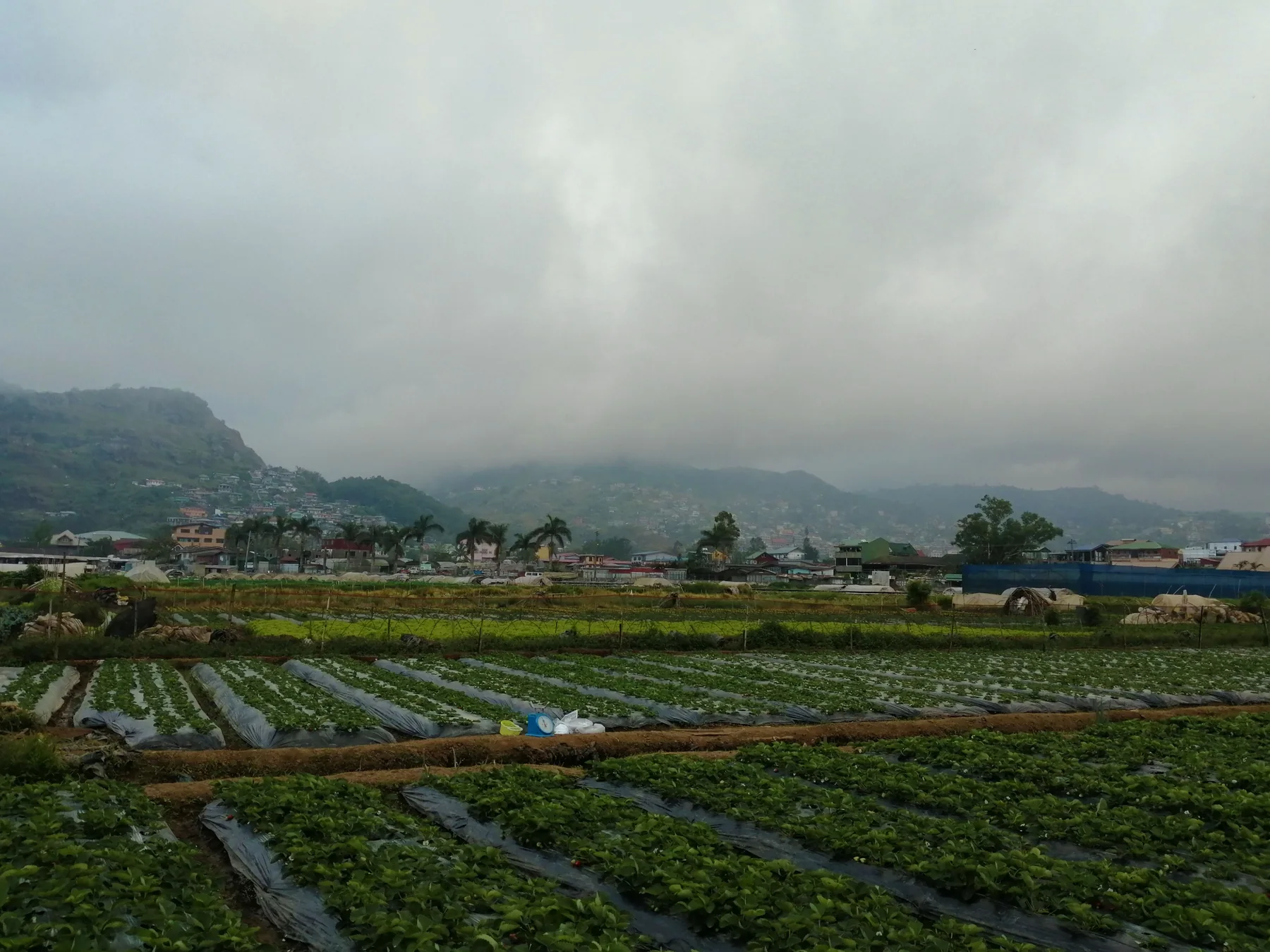
Strawberry rows, cool Cordillera air, warm taho and a market full of red. Also known on Google Maps as the Strawberry Farm - Home of Giant Strawberry Cake, this independent field guide helps you make a simple La Trinidad farm morning feel unhurried.
Cooler air, softer light, and a better chance to find active picking rows.
HOME OF GIANT STRAWBERRY CAKE
About this place
About La Trinidad Strawberry Farm
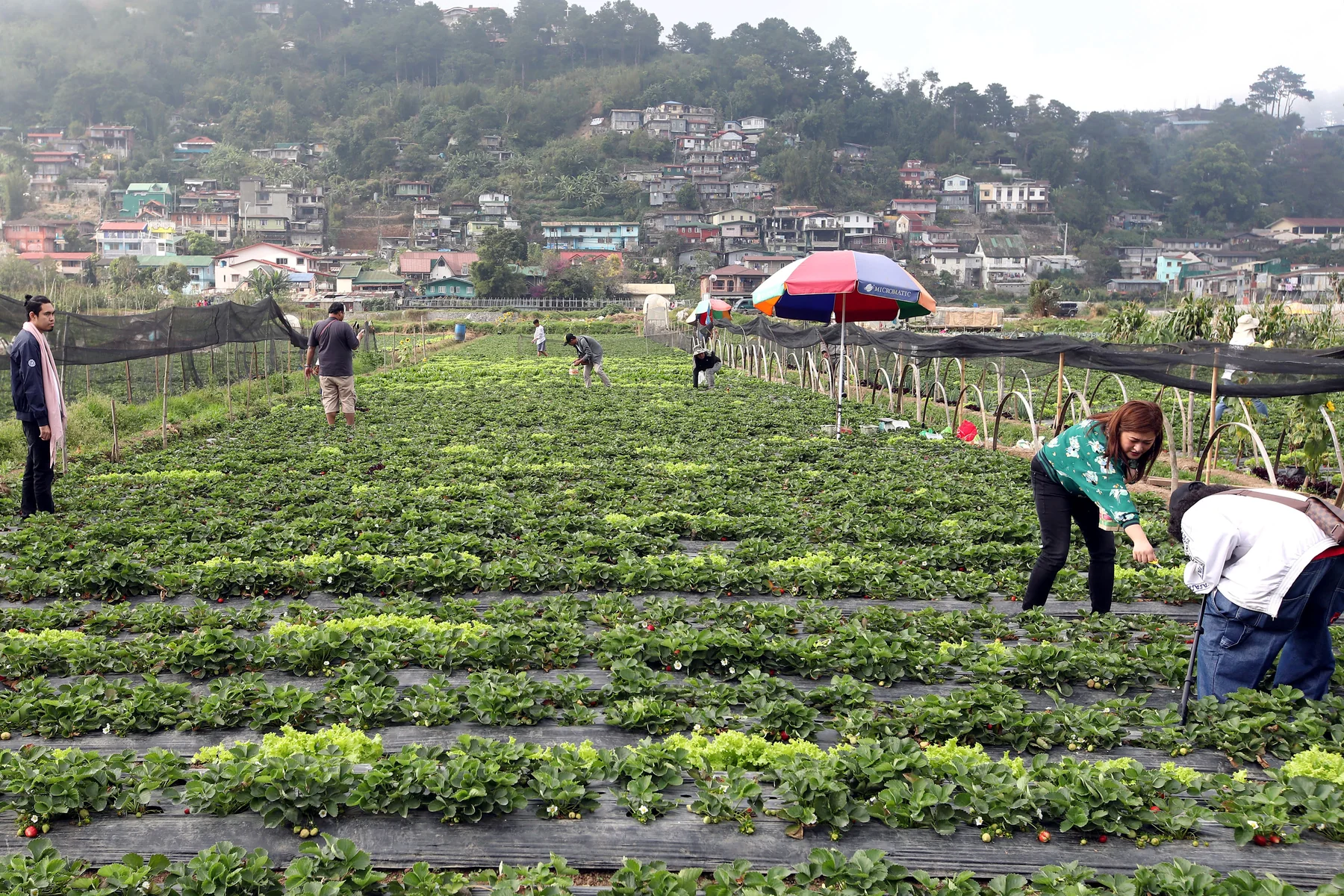
Welcome to Strawberry Farm - Home of Giant Strawberry Cake — widely recognized as the central La Trinidad Strawberry Farm. Located in the heart of La Trinidad, Benguet, Philippines, this working valley is a primary hub for travellers visiting the strawberry region around Baguio.
The Strawberry Farm sits in Betag, La Trinidad, where agriculture and tourism overlap. Visitors come for pick-your-own rows, but the farm’s character is just as much in the roadside stalls: berries, preserves, vegetables, woven goods and strawberry-flavoured pasalubong.
History & significance of La Trinidad Strawberry Farm
The valley’s story is agricultural long before it is tourist. La Trinidad sits on a cool upland plateau in Benguet, part of the Cordillera highlands farmed for generations by Ibaloi and Kankanaey communities — the broader reason Benguet is widely called the salad bowl of the Philippines.
Strawberries took hold here because altitude and cool nights suit short-day, cool-climate varieties that struggle in the lowlands. Growers plant in raised beds and rotate plots through the year, and regional agricultural research — including the work associated with Benguet State University — has supported how the crop is developed and taught in the valley.
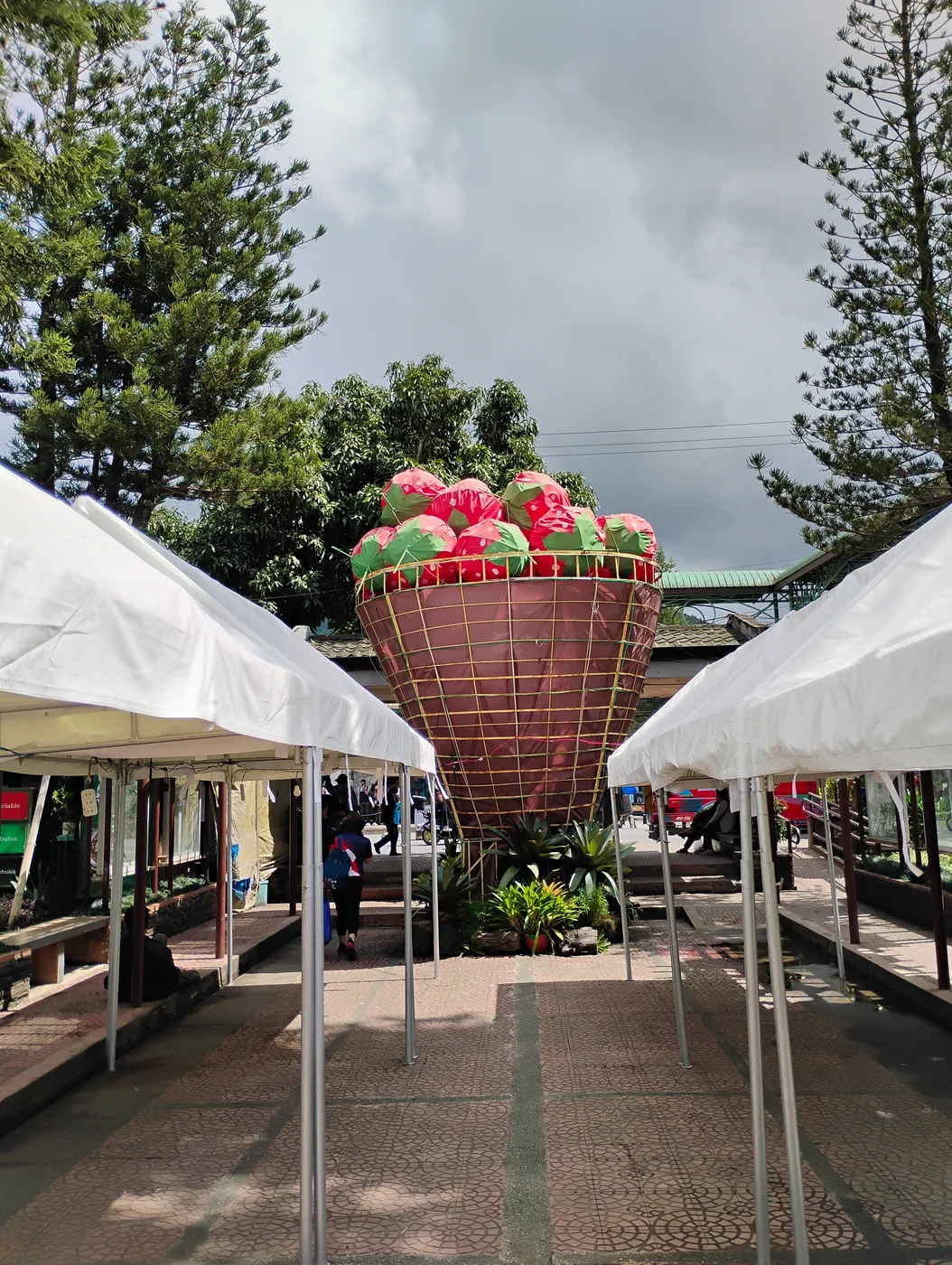
The “Home of Giant Strawberry Cake” label comes from the town’s Strawberry Festival tradition, when the harvest season is marked with an enormous strawberry cake. Treat it as living civic identity — a festival centrepiece and a landmark — rather than an exhibit that is standing on site every day.
Names, origin stories and the legends attached to the valley and its neighbouring peaks belong to the people who keep them. Ask at a cultural village or a local museum rather than trusting roadside summaries; Mt. Kalugong Cultural Village and Benguet’s local museums are where those stories are properly told.
Strawberry & Rose Capital
La Trinidad’s farm identity makes this stop feel rooted in the valley, not staged around a single photo spot.
Visitor rating
What visitors rate on Google
4.3 ★based on 4,105 Google reviews
Synced from Google Maps user reviews, October 2026; copyright belongs to the original authors and Google Maps.
Rates and crop availability change, so the most useful plan is to know what is stable—and what to confirm when you arrive.
Opening & timing
Start with the cool air.
Verified Oct 2026
Listed opening hours
6:00 AM–6:00 PM
Best arrival
Early morning
Main picking period
Oct–May*
Suggested stay
1.5–2.5 hours
*The Google Maps listing shows 6:00 AM–6:00 PM; the Baguio VISITA visitor listing gives 08:00–18:00 for the same attraction. Both are third-party listings, not an operator schedule, and individual stalls, cafés and picking plots keep their own hours. Harvest and opening windows are weather- and crop-dependent — a good season does not guarantee every row is open on a given day. Confirm time-sensitive details onsite.
Tickets / costs
Entrance fee, picking rates & cash.
Wider farm / market area
Commonly free to enter
Pick-your-own strawberries
Priced by weight
Recent visitor reports often mention ~₱500–₱700/kg as an indicative range, not a fixed official price.
Small local / activity fees
May apply at some access points
Bring small cash. Ask the grower for the day’s price before you start picking.
Parking
Early wheels win.
Parking is available around the farm area, but the easiest slots disappear first on weekends, holidays and busy picking mornings.
●Paid parking may apply depending on the lot.
●Keep small cash ready.
●Avoid blocking farm access roads while waiting.
Detailed guides
More on fees, hours & picking
Short answers live on this page. For prices, sources and the day’s rate, opening-hours sources and how a pick-your-own session works, see the dedicated guides below.
Location & how to visit La Trinidad Strawberry Farm in La Trinidad
The farm is close enough for a Baguio half-day, but traffic on the Baguio–La Trinidad corridor can change the feel of the trip. Build in breathing room.
01
Easiest
Taxi / Grab
From central Baguio, set the destination to Strawberry Farm, Betag, La Trinidad. A typical run can be around 20–30 minutes when traffic is moving, but peak traffic can make it longer. Ask to be dropped by the farm entrance / Strawberry Farm Road.
02
Budget
La Trinidad jeepney
Look for La Trinidad-bound jeepneys around the Magsaysay / Baguio Center Mall area. Tell the driver you are going to Strawberry Farm in Betag so you do not end up on a route that turns away earlier. From the drop-off, expect a short walk into the farm area.
03
Flexible
Private car
Follow the Baguio–La Trinidad–Bontoc Road, then the local approach into Strawberry Farm Road. Use the map pin below for the final turn. Arrive early if you want easier parking and a calmer walk between the stalls.
04
From the Airport
Bus + local ride
Fly into Clark International Airport (CRX) — about 2.5 hours by bus to Baguio via Dau terminal — or Ninoy Aquino International Airport in Manila (MNL), roughly 5–6 hours by deluxe bus to Baguio. From the Baguio bus terminal, take a taxi or La Trinidad jeepney the final 20–30 minutes to the farm. If arriving via Loakan Airport (Baguio), it is a short 15-minute taxi ride to Betag.
A Cordillera valley can shift fast between sun and drizzle. Check the current conditions and the next few days before you leave Baguio, and let the readout tell you what to pack.
Loading current conditions…
Bring a little red home.
What to taste
The farm stop is half picking, half pasalubong.
Even when picking is limited, there is plenty to eat and bring home. Look for fresh berries, strawberry taho, preserves, jams, ice cream, baked snacks and seasonal produce from the valley.
Fresh berries
Strawberry taho
Jam & preserves
Local vegetables
Baked treats
Souvenir stalls
Nearby food & side trips
Landmarks & attractions around La Trinidad Strawberry Farm
Pair the farm with one meal and one ridge or garden stop. When visiting La Trinidad Strawberry Farm, you can also explore surrounding landmarks and points of interest, including Baguio City and Benguet State University. It keeps the route simple and gives the valley room to breathe.
Nearby food
Eat close to the fields
🍓
Kabunian Cafe & Restaurant
Strawberry Farm Road · convenient after the market
Red Berry Cafe
Near the Orchidarium · easy coffee / snack stop
Dap-ayan Restaurant III
KM6 Betag · straightforward local meal option
Vintage Kitchen & Drinks
La Trinidad · a more sit-down finish to the farm visit
Nearby attractions
Add one change of altitude
⛰
Mt. Kalugong Cultural Village
Rock formations, Cordillera views and a cultural-village atmosphere.
Mt. Yangbew
A short ridge hike with open valley views; best if you still have energy.
Mount Costa
Landscaped gardens for a slower, more polished afternoon stop.
Best time / suggested duration
A two-hour farm rhythm.
You do not need a packed schedule. The best version is a sequence of small things done before the road gets busy.
First 20 min
Walk before you buy.
Check which fields are open, ask the day’s picking price, and look at the crop before committing.
Next 45–60 min
Pick slowly.
Choose fully red fruit, support the berry, and follow the grower’s instructions so plants are not damaged.
Next 30–40 min
Snack & browse.
Try strawberry taho or a dessert, then compare jams, produce and souvenirs before buying.
Last 20 min
Pack for the road.
Keep fresh berries shaded and upright, then leave before the warmest, busiest part of the day if you have another stop.
Visitor services
Facilities & amenities around the farm
As an independent, non-profit guide we list the types of facilities you can expect, not specific businesses. Arrangements change by season and operator, so confirm onsite.
Restrooms
Toilets & washing
Public and pay-per-use toilet blocks are commonly found near the main market and picking areas. Carry small cash and tissue, as supplies are not guaranteed at every block.
Parking
Car & bus parking
Open lots and roadside spaces sit around the farm perimeter. Paid parking may apply, and the easiest bays fill first on weekends and holidays — arrive early if driving.
Food & drink
Eateries & stalls
You will find cafés, carinderias and snack stalls of varying size, plus taho and dessert counters. None are endorsed here; pick what suits your group and budget.
Lodging
Stays nearby
Options range from small inns and pension houses to larger hotels in La Trinidad and Baguio. Book ahead for peak strawberry season and festival weekends.
Markets & shops
Pasalubong & produce
Market stalls sell fresh berries, jam, preserves, vegetables and souvenirs. Compare a few stalls before buying, and keep fragile produce shaded on the way home.
Fuel & charging
Fuel & EV points
Petrol stations sit along the Baguio–La Trinidad corridor, with EV charging appearing at malls and hubs. Top up before the final approach if you rely on a charged or fuelled vehicle.
Cash & ATMs
Money & ATMs
Most stalls prefer cash, especially for picking fees and small buys. Banks and ATMs are in La Trinidad and Baguio; withdraw before you reach the fields.
Help & info
Info & first aid
Look for municipal or barangay help points and roving guides during busy periods. For anything medical, seek the nearest clinic or pharmacy in La Trinidad town proper.
Getting around
Last-mile transport
From a Baguio bus terminal or jeepney drop-off, a short walk or a tricycle / taxi covers the final stretch into the farm area. Agree on the fare before boarding.
When to go
Seasonal visit strategy
La Trinidad’s highland climate stays cool all year. The Philippine Department of Tourism’s Benguet materials describe October to May as the main strawberry-picking period, with November to February typically the strongest supply and March the Strawberry Festival month. The table below blends those patterns with typical Cordillera weather and crowds — use it to time your trip, not as a guarantee. Keep three ideas apart: the general picking months, the peak-production months, and the festival dates are not the same thing.
General picking months
October – May
The window most visitors can expect to find pick-your-own rows open, per the Department of Tourism’s Benguet materials.
Peak production
November – February
Cool, dry conditions give the best supply and fruit quality. Expect the busiest farm mornings, especially on weekends.
Strawberry Festival
March
La Trinidad’s harvest festival month, when the town marks the season with events and the giant strawberry cake. Crowds rise around the dates.
Period
Climate & temperature
Strawberry outlook
Crowds
What to pack
Visitor tip
Nov – Feb
Dry, coolest stretch · ~13–22°C
Peak picking; best supply
Busiest, esp. weekends
Warm layer, light rain jacket
Go early; book stays ahead
Mar – May
Dry, warmer · ~15–25°C
Strong picking; festival month
High around festival dates
Sun protection, water
Check festival schedule first
Jun – Aug
Wet season · ~15–23°C
Lighter supply; greener fields
Calmer, fewer queues
Reliable rain gear
Aim for a clear morning window
Sep – Oct
Wet-to-dry shift · ~14–23°C
Variable; replanting phase
Quietest, most local
Layers + rain option
Call ahead; some rows rest
General picking months (October–May) follow the Philippine Department of Tourism’s Benguet materials; peak supply and the March festival sit within that window. Outside it (June–September) supply is lighter and many rows rest. Actual temperature, rain and harvest volume vary year to year with weather and farm rotation — ask the grower what is ready on the day.
Science briefing
Weather, water and valley ecology
Putting the weather, irrigation water and field ecology together explains why La Trinidad’s strawberries have a season — and how small visitor actions affect the valley. The climate normals below come from the 30-year climate-average concept: they describe a “typical year”, not any single day’s conditions.
Weather · 30-year normal
Cool highland climate
La Trinidad sits on Benguet’s cool upland plateau, with temperatures around 13–24°C. The dry season (November–May) is mostly rain-free and the wet season (June–October) brings more rain. Climate normals are a 30-year average used to judge a “typical month” — they do not guarantee any particular year or day.
Water · irrigation & catchment
Clean mountain water
Strawberry beds draw on highland streams and irrigation systems, and the valley is part of the Baguio–La Trinidad watershed. The cleaner the field water, the better the berries and vegetables. Not littering and not polluting the channels is how you help protect the water downstream.
Ecology · field life
Pollinators & neighbours
Bees and other pollinators are essential for the fruit to set; the valley also holds birds and small highland animals. Keep your distance, do not disturb or feed wildlife, and let the farmland and surrounding habitat each thrive — that is how the berry season lasts.
Bringing the three together (for visitors)
●Dry, cool months (roughly November–April) are best for picking and travelling; the wet season is greener but the beds are slippery and supply is lower.
●Water quality and pollinators together decide the harvest: protecting the source and disturbing fewer insects protects next year’s strawberries.
●The day’s weather follows the live module above; climate normals are only for planning the broad direction, not for predicting the day.
●Highland UV and the day–night temperature swing are pronounced — follow the weather module’s packing advice.
Climate normals follow the long-term average of the Philippine highland climate zones (dry November–May, wet June–October). Water and ecology are general science notes for the local farmland habitat. Defer to the figures published by local meteorological and water agencies.
Plan your route
Itineraries by traveller
Three tailored routes by who is travelling, plus two standard loops you can mix and match.
With kids
Family-friendly half-day
1 · Arrive early, walk the easy market rows.
2 · One short picking session, then taho break.
3 · Photo at the landmark, browse stalls.
4 · Lunch at a café near the fields, home by mid-afternoon.
Photography
Photo & nature loop
1 · Soft morning light on the rows — bring a jacket.
2 · Ridge or garden stop (e.g. a nearby viewpoint) for landscape shots.
3 · Return for market colour and detail photos.
4 · Golden-hour frame of the valley before leaving.
Easy pace
Low-effort / accessible
1 · Park close; use paved market areas, not the rows.
2 · Buy berries and snacks without picking.
3 · Sit-down meal with a valley view.
4 · Shuttle or taxi the last mile back to Baguio.
Half-day loop (≈3–4h)
Farm walk → short picking → market & taho → one photo stop. Best for tight schedules or first-time visitors from Baguio.
Full-day loop (≈6–7h)
Add a ridge or garden side trip and a sit-down meal. Comfortable pace with room for weather changes and traffic.
Field notes
Why this valley grows strawberries
La Trinidad sits at cool upland elevation in Benguet, a climate that suits short-day strawberry varieties — the type that forms fruit as days shorten and nights cool. That is the simple agronomy behind the town’s “strawberry capital” identity.
The crop is grown in raised beds and rotated through the year, so not every row is ready at once. Picking windows, supply and price all move with the weather and the planting calendar — which is why a guide can only point you to the right questions, not a fixed daily rate.
Visitor responsibility
●Follow the grower’s instructions and pick only where picking is allowed.
●Choose fully red fruit and handle plants gently so beds stay productive.
●Carry small cash and confirm the day’s price before you start.
●Take your wrappers and plastics with you; bins are limited near the rows.
●Respect private plots, other visitors and local traffic on narrow farm roads.
●Treat the Giant Strawberry Cake as town heritage, not a daily on-site exhibit.
Photo wall
Red rows, green hills, market mornings.
Real photographs of the farm experience, stored locally in the project. Select any image to open it larger.
FAQ
Before you head to the rows
When is the best time to pick strawberries?+
The Department of Tourism’s Benguet materials describe October to May as the main picking period, with the strongest supply and fruit quality typically from November to February, and March the Strawberry Festival month. February to April is often a reliable window, but harvest volume depends on weather, field rotation and the day’s crop. Arrive early and ask growers what is available before paying for a picking basket.
Is there an entrance fee?+
Walking around the wider farm and market area is commonly free. Small local, environmental or activity fees may be collected at some access points, and strawberry picking is charged separately by weight. Confirm the day’s arrangement onsite.
How much does strawberry picking cost?+
Picking is priced by weight and can change by grower, season and supply. Recent visitor reports commonly mention roughly ₱500–₱700 per kilogram as an indicative range, but it should not be treated as a fixed official rate.
What are the Strawberry Farm opening hours?+
The Google Maps listing commonly shows the Strawberry Farm area opening daily from 6:00 AM to 6:00 PM, while the Baguio VISITA visitor listing gives 08:00–18:00 for the same attraction. Both are third-party listings, not an operator schedule, and individual stalls, cafés and picking plots keep their own hours. The busiest, best-stocked window is usually early morning to late afternoon; confirm peak-season hours locally before a very early or late visit.
Where is the Strawberry Farm located?+
It sits in Barangay Betag, La Trinidad, Benguet, along Strawberry Farm Road, about 20–30 minutes north of Baguio City centre when traffic is moving. Use the map pin (16.4580848, 120.5877882) and search for Strawberry Farm, Betag, La Trinidad rather than just “strawberry farm”.
How do I get to the Strawberry Farm from Baguio?+
The easiest options are a taxi or Grab straight to Strawberry Farm Road, or a La Trinidad-bound jeepney from the Magsaysay / Baguio Center Mall area, followed by a short walk into the farm area. Private cars follow the Baguio–La Trinidad–Bontoc Road and turn into Strawberry Farm Road.
Is this the official Strawberry Farm website?+
No. This is an independent visitor guide and is not affiliated with Benguet State University, the Municipality of La Trinidad or the farm operators. Official advisories and contest or festival announcements come from those bodies; use this page for practical trip planning, then confirm prices and hours onsite.
How long should I spend at the farm?+
Allow about 1.5–2.5 hours if you want to pick, browse the pasalubong stalls, snack and take photos. A quick market-and-photo stop can fit into roughly an hour.
Can I visit without picking strawberries?+
Yes. You can still walk the farm area, shop for fresh berries and local products, try strawberry snacks and enjoy the Cordillera valley scenery without joining a pick-your-own activity.
Is parking available?+
Parking is available around the farm area, but spaces can fill quickly on weekends, holidays and peak strawberry-season mornings. Paid parking may apply depending on the lot, so bring small cash and arrive early if driving.
Sources
Sources & references
Reviews · Synced October 2026 · Synced from Google Maps user reviews, October 2026; copyright belongs to the original authors and Google Maps. View all reviews on Google Maps ↗
Location & transport · Coordinates, address and rating come from the Google Maps place listing; local tourism background references the La Trinidad tourism office and Benguet State University public materials.
Weather & climate · Live conditions and the 7-day forecast are provided by a public weather service and briefly cached; the seasonal strategy and climate notes reference the long-term Philippine highland climate average (dry November–May, wet June–October) as a “typical year” only. Defer to figures from local meteorological agencies.
Photos · Farm and landmark photos are credited in the project image notes (some from Wikimedia Commons and similar); copyright belongs to the original authors.